
 EN
EN
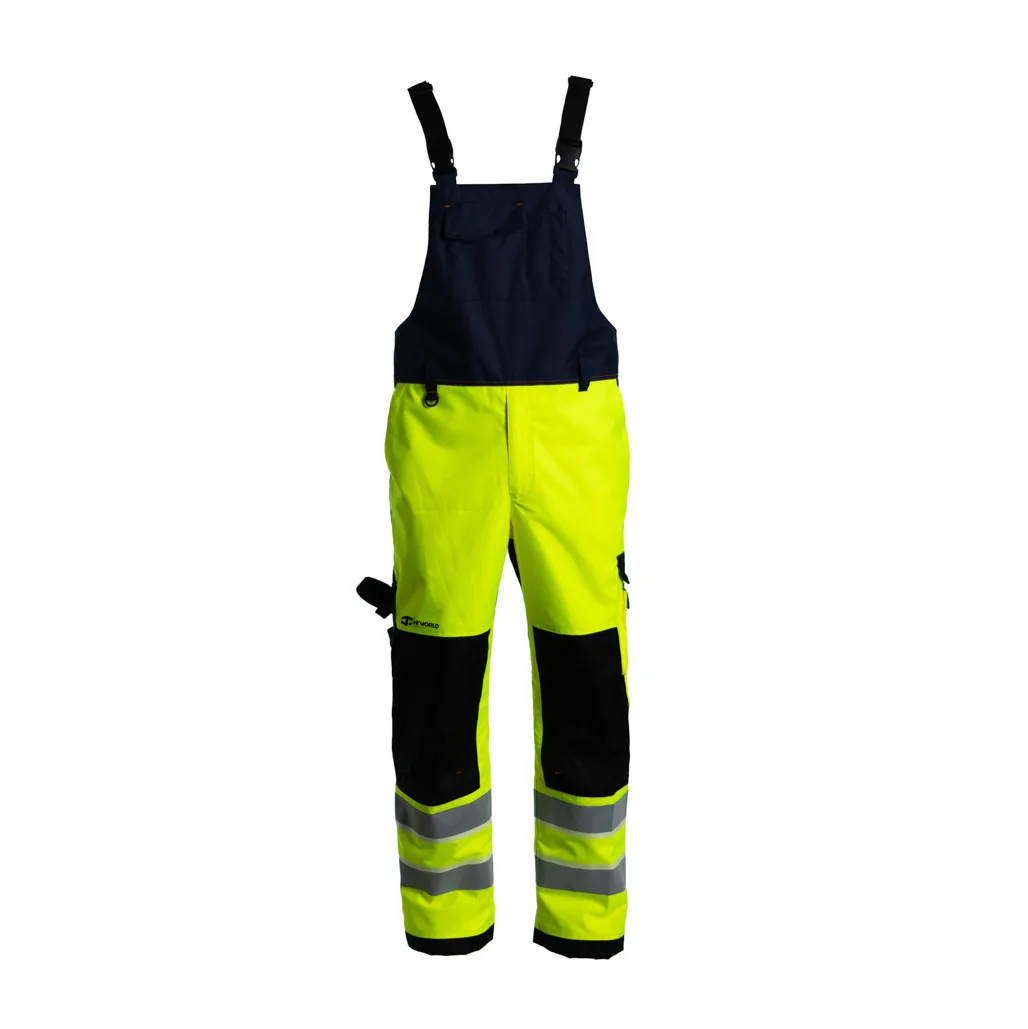
Understanding EN 1149 anti-static workwear standards is vital for procurement officers in explosive, chemical, and precision electronic manufacturing environments. In high-risk operational zones classified under ATEX regulations, an unnoticed electrostatic discharge (ESD) can trigger catastrophic industrial fires or destroy sensitive semiconductor components. Achieving true EN 1149-5 compliance requires far more than stitching conductive threads into basic poly-cotton garments. It demands a holistic engineering approach that aligns raw material selection, grid geometry, garment construction, and rigorous laboratory testing.
As a specialized protective apparel manufacturer, HIWORLD engineers safety garments designed to bridge technical performance with real-world worker protection. This technical guide breaks down the core components of anti-static workwear standards, detailing what compliance actually entails from the factory loom to the final quality inspection.
Deciphering the EN 1149 Standards Framework
The European standard for electrostatic protective clothing is divided into five distinct sub-parts, each defining a specific aspect of material performance, test procedure, or garment design. When evaluating EN 1149 anti-static workwear, safety directors must verify which specific parts of the standard are certified:
-
EN 1149-1 (Surface Resistivity): Measures electrostatic surface resistance (less than or equal to 2.5 x 10^9 Ohms) on homogenous materials or conductive grids with surface-exposed conductive fibers.
-
EN 1149-2 (Vertical Resistance): Measures electrical resistance through the depth of a fabric material (R less than or equal to 10^8 Ohms), critical for flame-retardant multi-layer assemblies.
-
EN 1149-3 (Charge Decay): Measures the rate at which electrostatic charge dissipates via induction. It is essential for fabrics with non-surface-exposed core-conductive synthetic fibers.
-
EN 1149-4 (Garment System Test): Under development and drafting phase for whole-suit testing.
-
EN 1149-5 (Performance Requirements): The overarching standard for garment certification. To claim EN 1149-5 compliance, a garment's fabric must pass EN 1149-1 or EN 1149-3, and its ergonomic design must eliminate exposed non-conductive hardware.
For complete workplace protection across hazardous facilities, review HIWORLD's
Technical Parameters: Comparing Test Methods & Material Specs
To select the right conductive grid fabric for your facility, compare the physical and electrical metrics evaluated under European protective workwear standards:
| Technical Metric | EN 1149-1 Test Method | EN 1149-3 Test Method | HIWORLD Factory Benchmark |
| Primary Mechanism | Surface conduction along grid threads | Inductive dissipation across core fibers | Dual-action grid + core filament integration |
| Pass/Fail Threshold | Surface resistance Rs <= 2.5 x 10^9 Ohms | Half decay time t50 < 4s or Shielding factor S > 0.08 | Surface resistance Rs < 1.0 x 10^7 Ohms; t50 < 0.8s |
| Fiber Architecture | Surface-braided carbon/metal filaments | Core-sheath carbon-coated synthetic fibers | High-density 5mm x 5mm continuous grid |
| Industrial Use Case | Dry chemical processing, assembly lines | Petrochemical refines, ATEX Zone 1/21 | High-risk multi-hazard environments |
By maintaining thresholds significantly lower than the maximum limits allowed by anti-static workwear standards, HIWORLD garments preserve protective integrity even after repeated industrial laundering cycles.
Garment Engineering & Construction Pitfalls
Full compliance extends beyond fabric testing. A certified conductive grid fabric loses its protective capability if garment construction creates electrostatic traps, following the pathway from the worker's body through the conductive garment grid to grounding and ESD footwear.
To maintain EN 1149-5 compliance, the complete clothing assembly must follow strict engineering rules:
-
Coverage of Non-Complying Layers: The outer material must completely cover all inner clothing during normal movements (stooping, reaching, bending).
-
Hardware Isolation: Metallic zippers, snap buttons, and sliders must be completely covered by protective fabric flaps. Exposed metal creates concentrated spark points in explosive atmospheres.
-
Seamless Grounding: Garment design must enable continuous contact between the conductive fabric and the wearer's skin (e.g., conductive cuffs or direct skin contact points) to allow charge to bleed off safely through ESD-rated footwear.
Failure to address these critical design parameters is a common reason uncertified PPE fails field testing. For more details on multi-hazard garment design, explore our guide on
Factory Quality Control & Testing Protocol
At HIWORLD's 7,000 square meter manufacturing facility, every batch of EN 1149 anti-static workwear undergoes rigorous quality checks:
-
Conditioning Phase: Prior to testing, fabric samples are conditioned for 24 hours at 23 degrees Celsius plus or minus 1 degree and 25 percent relative humidity plus or minus 5 percent. Low humidity provides the most challenging conditions for static accumulation.
-
Pre-Wash Durability Testing: Standard compliance mandates testing after 5 industrial wash cycles. HIWORLD tests anti-static performance after 50 industrial wash cycles at 60 degrees Celsius to ensure long-term durability.
-
Conductive Fiber Integrity Inspection: Microscopic inspection verifies that the continuous carbon matrix retains its structural integrity without breaking at high-stress seams.
Quality Note: Always verify that your PPE supplier provides third-party test reports from accredited laboratories (such as Shirley Technologies, Centexbel, or SATRA) showing full compliance with EN 1149-5 clause 4.2.
Procurement Checklist: Avoiding Common Compliance Pitfalls
When sourcing EN 1149 anti-static workwear for industrial operations, use this procurement checklist to verify authenticity and safety:
-
Check the Garment Labeling: Compliant items must bear the EN 1149 pictogram (a shield showing a lightning bolt over a glove/garment) accompanied by the specific sub-part numbers (e.g., EN 1149-5).
-
Confirm Dual-Certification Needs: If your workplace presents combined fire and static hazards, ensure the garment holds dual certification under EN ISO 11612 (Flame Resistance) and EN 1149-5.
-
Evaluate Grid Geometry: Verify whether the conductive grid fabric uses a 5mm grid or a 5mm stripe pattern. A 5mm x 5mm grid provides multi-directional charge dissipation compared to single-direction stripes.
-
Review Custom OEM Capabilities: Ensure your manufacturer can add corporate branding or high-visibility tapes without compromising electrical continuity or violating EN 1149-5 compliance.
For tailored industrial apparel quotes or technical fabric datasheets, consult our specialists via
Conclusion
True EN 1149-5 compliance is a combination of advanced textile science, precision garment construction, and strict quality assurance. By choosing EN 1149 anti-static workwear built around continuous conductive grid fabric technologies and engineered to meet rigorous anti-static workwear standards, safety managers can protect their workforce and maintain compliance across all operating environments.