
 EN
EN
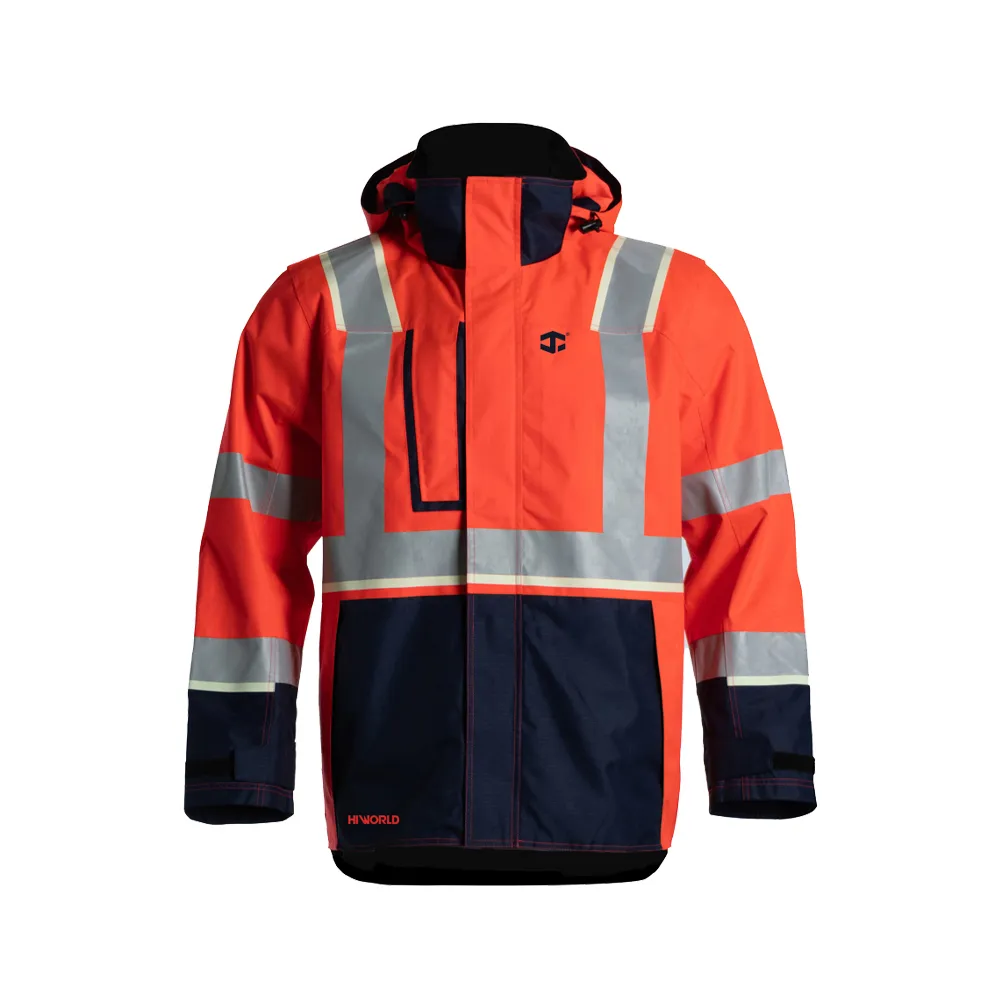
Selecting anti-static clothing for explosive atmospheres requires strict alignment between environmental zone risks and protective textile engineering. In ATEX-regulated workplaces such as oil refineries, grain silos, chemical processing plants, and offshore platforms, a single electrostatic spark can ignite flammable vapors, gases, or combustible dust clouds. Standard workplace apparel made of untreated synthetic fibers easily accumulates static charges that discharge uncontrollably. Procuring certified ATEX anti-static garments is not merely an internal safety option—it is a legal requirement under European Workplace Directive 1999/92/EC (ATEX 137).
As an experienced manufacturer of technical personal protective equipment (PPE), HIWORLD designs specialized clothing to dissipate static charges safely before spark discharge can occur. This guide answers the single vertical technical question faced by industrial safety managers: how to evaluate, specify, and select compliant EN 1149-5 protective clothing tailored directly to specific ATEX explosive zones.
Understanding ATEX Zones and Static Charge Risks
ATEX environments are categorized based on the frequency and duration of an explosive atmosphere's presence. Choosing appropriate ESD apparel for ATEX zones requires matching the fabric's charge decay mechanism and surface resistivity to the hazard level of each operational area.
-
ATEX Zone 0 / Zone 20: Explosive atmosphere containing gases, vapors, or dust is present continuously or for long periods. Garments must feature ultra-low charge decay time and continuous grounding paths to completely prevent static accumulation.
-
ATEX Zone 1 / Zone 21: Explosive atmosphere is likely to occur in normal operation occasionally. Garments must meet full EN 1149-5 standards with high wash-durability conductive grid fabrics.
-
ATEX Zone 2 / Zone 22: Explosive atmosphere is not likely to occur in normal operation, but if it occurs, will persist for a short period only. Garments must maintain surface resistivity below 2.5 x 10^9 Ohms under low-humidity conditions.
When safety directors specify anti-static clothing for explosive atmospheres, they must account for both ambient humidity and garment grounding. In low-humidity environments (under 30 percent relative humidity), static accumulation accelerates dramatically, making high-performance conductive carbon filaments essential.
For broader insights into protective apparel standards, consult HIWORLD's
Technical Parameter Comparison across ATEX Classifications
To ensure full compliance and worker safety, evaluate the specific textile parameters required for different explosive atmosphere classifications:
| Technical Parameter | Zone 2 / 22 Standard Protection | Zone 1 / 21 High Risk Protection | Zone 0 / 20 Extreme Risk (HIWORLD Spec) |
| Core Protective Standard | EN 1149-1 Surface Resistivity | EN 1149-3 Charge Decay + EN 1149-5 | EN 1149-5 + EN ISO 11612 Dual Anti-Static/FR |
| Surface Resistivity Threshold | Less than or equal to 2.5 x 10^9 Ohms | Less than or equal to 1.0 x 10^8 Ohms | Less than or equal to 1.0 x 10^7 Ohms |
| Charge Decay Half-Time (t50) | Less than 4.0 seconds | Less than 1.0 second | Less than 0.5 seconds |
| Conductive Fiber Matrix | 10mm stripe carbon yarn | 5mm x 5mm grid conductive filament | 3mm x 3mm continuous core-sheath grid |
| Grounding Requirement | Dissipative via ambient air/flooring | Direct ESD footwear skin contact | Direct wrist/cuff skin continuity contact |
By engineering ATEX anti-static garments with tighter grid spacing (3mm to 5mm continuous grid structures), HIWORLD ensures that electrostatic charges dissipate rapidly across the entire surface area of the garment.
Critical Selection & Engineering Pitfalls in ATEX Environments
Procuring compliant EN 1149-5 protective clothing requires looking beyond fabric certificates. Construction flaws can easily compromise a garment's safety performance in explosive atmospheres.
-
Exposed Conductive Hardware: Zippers, snaps, metal buttons, and belt buckles must be fully covered by flame-retardant, anti-static fabric flaps. Exposed metal elements act as isolated conductors, storing electrical charge that can discharge as a high-energy spark.
-
Incomplete Layer Coverage: Outer anti-static clothing for explosive atmospheres must completely cover all non-compliant inner clothing layers during active movements, including reaching, stooping, and lifting.
-
Lack of Wrist and Ankle Continuity: Cuffs and ankles must maintain contact with conductive skin points or ESD footwear to ensure uninterrupted charge dissipation from the wearer's body to the grounded floor.
Failure to address these critical design details can cause uncertified workwear to fail ATEX field audits. To learn more about protective coveralls, visit HIWORLD's guide on
Factory Testing & Quality Assurance Protocols
HIWORLD implements strict laboratory testing protocols at our 7,000 square meter manufacturing center to ensure every batch of ESD apparel for ATEX zones delivers reliable protective performance:
-
Pre-Conditioning Testing: Fabric samples undergo 24-hour climate conditioning at 23 degrees Celsius and 25 percent relative humidity. Testing under dry atmospheric conditions guarantees that the garments perform in winter or arid operating environments.
-
Industrial Wash Cycle Testing: Standard ATEX garments often degrade after 5 to 10 washes. HIWORLD validates static charge decay and surface resistivity after 50 industrial wash cycles at 60 degrees Celsius, ensuring long-term field durability.
-
Tensile & Seam Burst Testing: In explosive atmospheres, torn seams expose inner non-compliant garments. Seams are reinforced with double-needle stitching using high-tenacity aramid or anti-static threads to prevent structural failure under mechanical stress.
Safety Audit Tip: Always request third-party certification test reports from independent bodies (such as SATRA, Shirley Technologies, or Centexbel) verifying EN 1149-5 compliance alongside EN ISO 13688 general ergonomics.
Procurement Checklist for ATEX Anti-Static Clothing
When sourcing ATEX anti-static garments for hazardous workplace operations, use this structured evaluation checklist:
-
Verify Zone Compatibility: Confirm that the selected anti-static clothing for explosive atmospheres matches the specific gas, vapor, or dust zone classifications of your site.
-
Check Dual-Hazard Requirements: If explosive atmospheres coincide with thermal or flash-fire risks (e.g., petrochemical refining), ensure the clothing holds dual certification under EN 1149-5 and EN ISO 11612.
-
Inspect Conductive Grid Layout: Prefer continuous 5mm x 5mm or 3mm x 3mm grid architectures over single-direction stripe patterns to ensure multi-directional dissipation.
-
Confirm OEM Customization Rules: Ensure that corporate logo embroidery or high-visibility reflective tape application uses flame-resistant and static-dissipative threads without breaking conductive continuity.
For customized procurement quotes or detailed technical fabric spec sheets, contact our technical team via
Conclusion
Selecting the right anti-static clothing for explosive atmospheres requires combining precise ATEX risk mapping with advanced conductive textile engineering. By specifying EN 1149-5 protective clothing built with continuous conductive grid structures and rigorous industrial wash durability, plant managers can eliminate electrostatic ignition risks and ensure full ATEX compliance across all facility operations.