
 EN
EN
Modern industrial workwear needs to feel like a second skin, not a heavy canvas cage. When a technician is reaching overhead to install heavy machinery, squatting to inspect low pipelines, or twisting to tighten bolts in a cramped bay, traditional rigid uniforms pull back against every single muscle contraction. That constant resistance generates micro-fatigue, speeds up physical exhaustion, and slowly causes tissue strain. Solving this problem requires rethinking how clothes are cut, panelled, and constructed. By building workwear around human joint kinematics rather than static dress mannequins, dynamic patternmaking eliminates physical restrictions and keeps crews comfortable, safe, and fully efficient throughout long shifts.
Biomechanical Mapping for Joint Articulation
Every major movement on a worksite relies on three key pivot points: the shoulders, the hips, and the knees. Traditional straight-cut work pants and boxy jacket patterns pinch and bind right at these fulcrums. Biomechanical mapping changes the game by tracking how human skin stretches and contracts across these areas during heavy physical work. Designers then drop articulation seams and dynamic gussets directly where the body needs space to move.
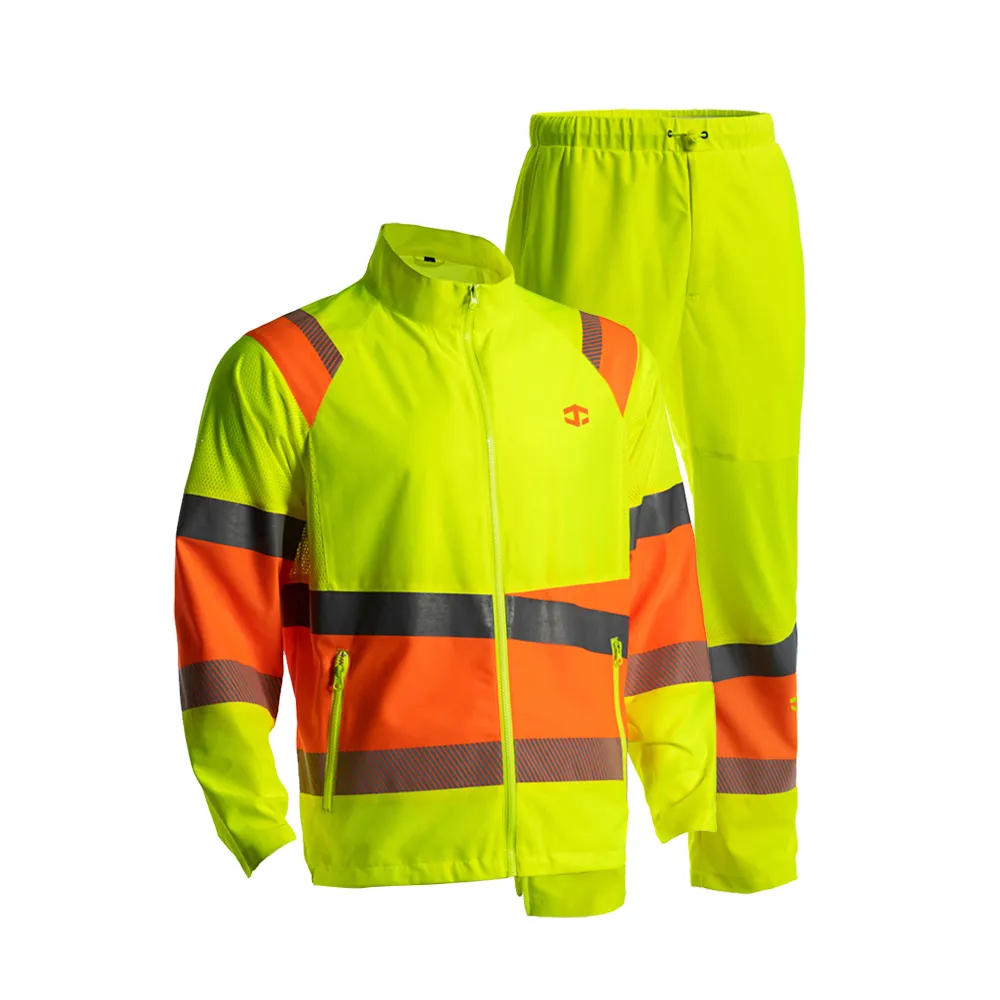
For high-reaching tasks, swapping a standard set-in sleeve for an updated raglan cut with a lifted armhole prevents the entire hem of a jacket from riding up when hands go above the head. During deep squatting or kneeling, diamond-shaped crotch gussets and pre-shaped knee darts prevent dense fabric from piling up behind the knee joint, eliminating an annoying source of pressure and circulation pinch. When it comes to torso rotation, placing diagonal stretch panels across the lower back lets workers twist freely without their shirts coming untucked or digging into their waist. Pairing these geometric tweaks with durable 4-way stretch textiles supports the body natural movement arc, lowering muscle strain and keeping physical exhaustion at bay during grueling shifts.
Real World Impact on Worker Health and Performance
The practical benefits of replacing stiff, old-school coveralls with anatomically engineered workwear are easily measured on the factory floor. Long-term field trials tracking industrial crews show dramatic drops in daily fatigue and physical pain when workers wear uniforms designed for continuous motion.
When clothing flexes naturally with the body, workers make far fewer strain-compensating movements. Instead of twisting their lower back awkwardly because a jacket restricts shoulder rotation, they move with natural posture. This reduces tiny micro-traumas in soft tissue, keeping lower back stiffness and shoulder tightness from building up by mid-shift. Less physical discomfort translates directly to higher operational focus, faster task completion, and fewer mistakes caused by tired hands and sore backs. Designing workwear around physical motion is not just about keeping workers comfortable—it protects crew health, improves retention, and drives daily productivity.
Performance and Shape Recovery in Four Way Stretch Engineering
Bringing true biomechanical flexibility into heavy-duty garments depends on textiles that stretch in every direction and snap back into place instantly. Stretch alone is not enough; without rock-solid shape recovery, garments sag at the knees, bag out at the elbows, and lose the clean fit needed to support movement. Designing high-performance stretch fabrics for rugged workplace conditions means carefully testing how fibers and knits hold up under heavy wear, pulling, and harsh washing routines.
Elongation Recovery After Industrial Washing
A stretch fabric that loses its elasticity after a few weeks in a commercial laundry drum completely destroys the fit of an ergonomic garment. Standard lab testing subjects stretch fabrics to dozens of high-temperature wash and dry cycles to measure how well they bounce back. High-grade 4-way stretch weaves retain nearly all of their original recovery capacity even after heavy laundering. In contrast, lower-grade knits quickly break down, leaving loose, baggy pockets of fabric that snag easily and force muscles to work harder against dead weight.
Consistent recovery keeps sleeve cuffs snug around wrists after hours of overhead reaching, keeps knee panels crisp during continuous crouching, and maintains a clean fit through the seat during deep squats. Maintaining this tight structural shape prevents loose fabric from catching on equipment or creating tripping risks. For crews who bend, stretch, and climb every single day, resilient fabric elasticity cuts down unnecessary energy burn and protects soft tissues from constant wear.
Balancing Flexibility with Flame and Cut Protection
Mixing elastic fibers into protective fabrics requires careful chemical and structural engineering, as standard stretch yarns can melt when exposed to extreme heat or arc flashes. To solve this, technical fabric makers blend heat-resistant aramid fibers with high-temperature elastane formulations. This creates garments that easily meet strict flame-retardant safety ratings while retaining comfortable multi-directional stretch.
To balance cut resistance with flexible comfort, garment designers use targeted zonal construction. Highly protective, densely woven para-aramid yarns are concentrated on high-risk areas like forearms and thighs. Meanwhile, lighter 4-way stretch panels are positioned over low-risk, high-mobility zones like the upper back and crotch gussets. This hybrid approach delivers fully certified protection without sacrificing movement, proving that safety compliance and easy mobility can work side by side.
Sustaining Mobility Across the Workwear Lifecycle
Durable mobility relies on garments holding their engineered shape throughout months of harsh industrial washing. Dimensional stability tests prove that premium nylon-elastane blends keep shrinkage under minimal levels even after repeated hot wash cycles. Controlling shrinkage is critical because losing even a few millimeters along a tailored seam can throw off joint alignment and make gussets feel tight.
When garments keep their original shape over time, dynamic stretch zones continue absorbing mechanical pull instead of transferring that tension onto the worker muscles. This precise long-term fit guarantees that protective apparel delivers continuous comfort, easy movement, and reliable performance across its entire working lifespan.
Inclusive Mobility and Anthropometric Tailoring
True mobility must accommodate all body types across a diverse workforce, going far beyond basic size grading. Anthropometric patterning adjusts garment shapes to real human proportions: diamond crotch gussets remove thigh pinch for heavier builds, while articulated sleeves match the natural curve of the arm regardless of torso length or shoulder width. Multi-directional stretch allows workers across different height and reach percentiles to flex, reach, and crouch without restriction.
Building reliable, high-performance workwear requires an experienced manufacturing partner who understands both advanced textile science and complex garment construction. As a specialized OEM and ODM producer, hiworld combines ergonomic pattern engineering with high-performance 4-way stretch fabrics. Through precise fabric blending, rigorous durability testing, and agile global supply chain capabilities, hiworld delivers custom workwear solutions that balance uncompromising safety standards with effortless human movement.
Frequently Asked Questions
What is ergonomic patterning in garment design
Ergonomic patterning shapes clothes to match natural human body movements. It uses features like pre-bent sleeves, flexible gussets, and strategic stretch panels to reduce body strain during physical work.
How does four way stretch fabric improve workwear mobility
Four way stretch fabric flexes vertically and horizontally, giving workers complete freedom of movement while ensuring the garment keeps its original shape over extended use.
How is fabric durability measured after repeated industrial washing
Standard tests measure stretch bounce-back and dimensional shrinkage after multiple hot wash cycles to ensure garments retain their fit and flexibility over time.
Can flexible workwear meet high heat and cut safety standards
Yes, protective garments achieve both safety and mobility by pairing heat-resistant aramid fibers with specialized elastane and placing high-protection fabrics only where they are needed most.
Why is anthropometric tailoring essential for industrial uniforms
Anthropometric tailoring ensures uniforms fit diverse body sizes naturally, reducing muscle strain and keeping workers comfortable regardless of their height or build.
Table of Contents
- Biomechanical Mapping for Joint Articulation
- Real World Impact on Worker Health and Performance
- Performance and Shape Recovery in Four Way Stretch Engineering
- Elongation Recovery After Industrial Washing
- Balancing Flexibility with Flame and Cut Protection
- Sustaining Mobility Across the Workwear Lifecycle
- Inclusive Mobility and Anthropometric Tailoring
-
Frequently Asked Questions
- What is ergonomic patterning in garment design
- How does four way stretch fabric improve workwear mobility
- How is fabric durability measured after repeated industrial washing
- Can flexible workwear meet high heat and cut safety standards
- Why is anthropometric tailoring essential for industrial uniforms